

I was perusing a thrift store yesterday when I came across this DVD on sale for 2$:
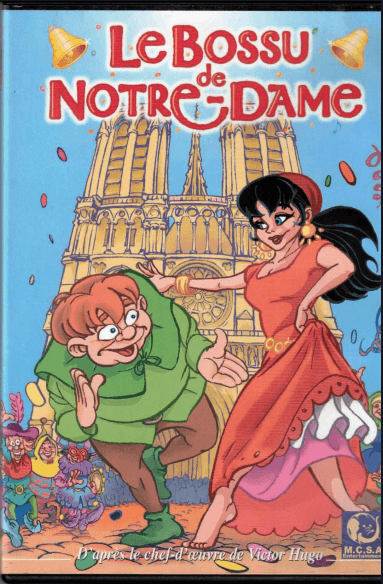
That's right, this is a DVD of The Hunchback of Notre Dame (in French, as I live in Québec), but not the well-known Disney version from 1996. It is, instead, a whole other animated adaptation of Victor Hugo's Notre-Dame de Paris. That intrigued me. And it intrigued me even more when I had a look at the back cover, which had text that said "Sale exclusively reserved for Belgium".
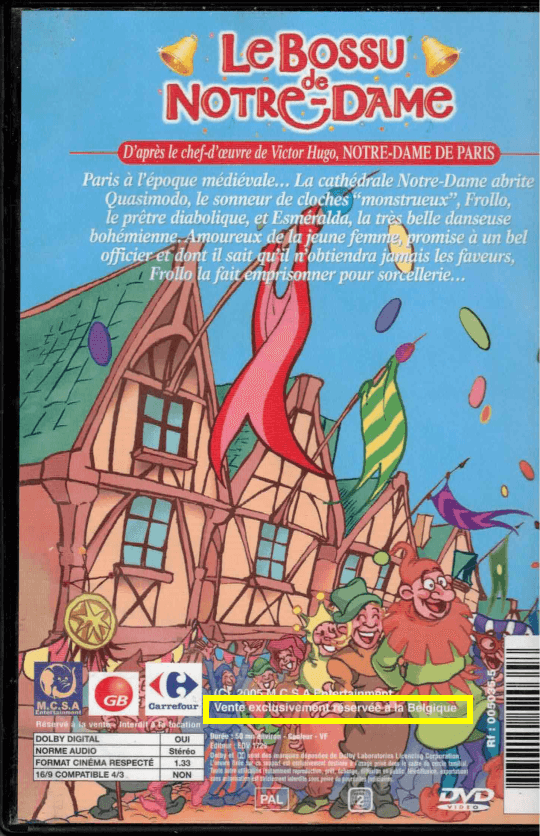
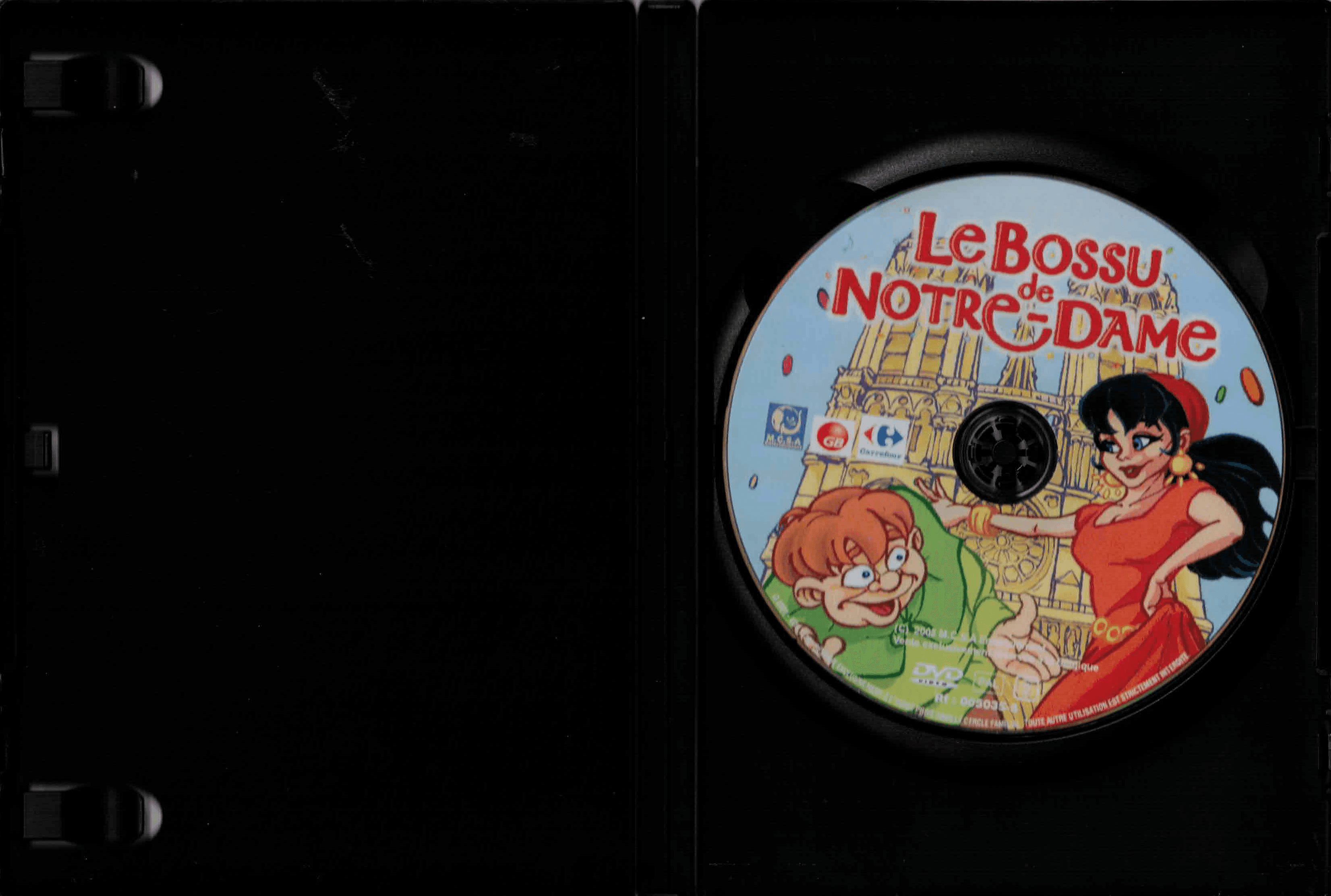
It intrigued me enough that I bought it. And so began the search for the story behind that obscure adaptation that seemed to be from 2005, if I was to believe the copyright year on the back cover and on the DVD itself. The DVD seemed to have been released by a company called M.C.S.A Entertainment.
I used various search terms on DuckDuckGo (my usual search engine) to try to find a movie titled either The Hunchback of Notre Dame or Le Bossu de Notre-Dame that would have been released in 2005, possibly only in Belgium. The search didn't return anything relevant, even when adding M.C.S.A Entertainment to my search terms. IMDb didn't seem to acknowledge that movie either.
Now, in real desperate web search situations, I sometimes end up resorting to Google (which still admittedly often has better results than DuckDuckGo). I don't know why, but I didn't originally think of doing that. If I had, I would have found out that the DVD I had in my hands DOES show up on Google, along with ANOTHER non-Disney adaptation!
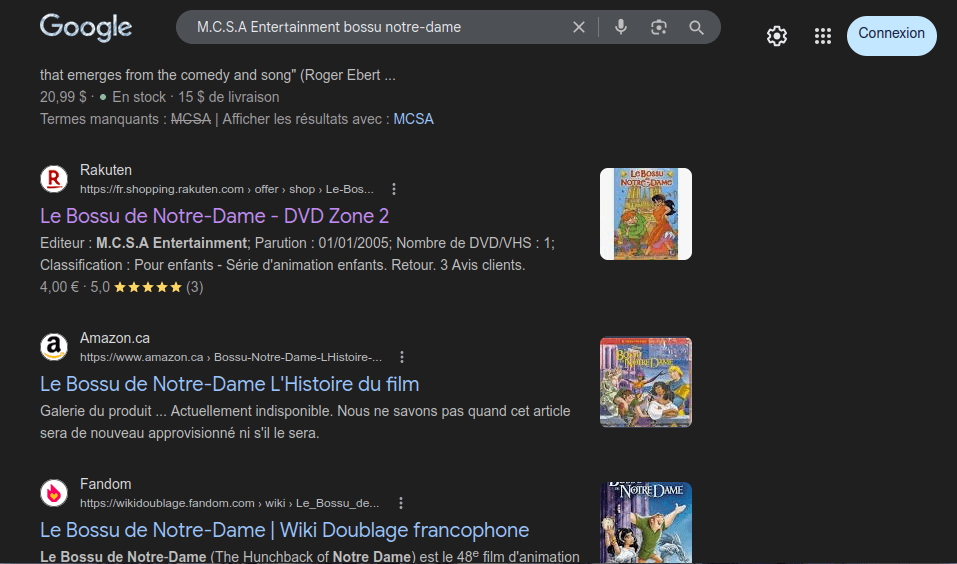
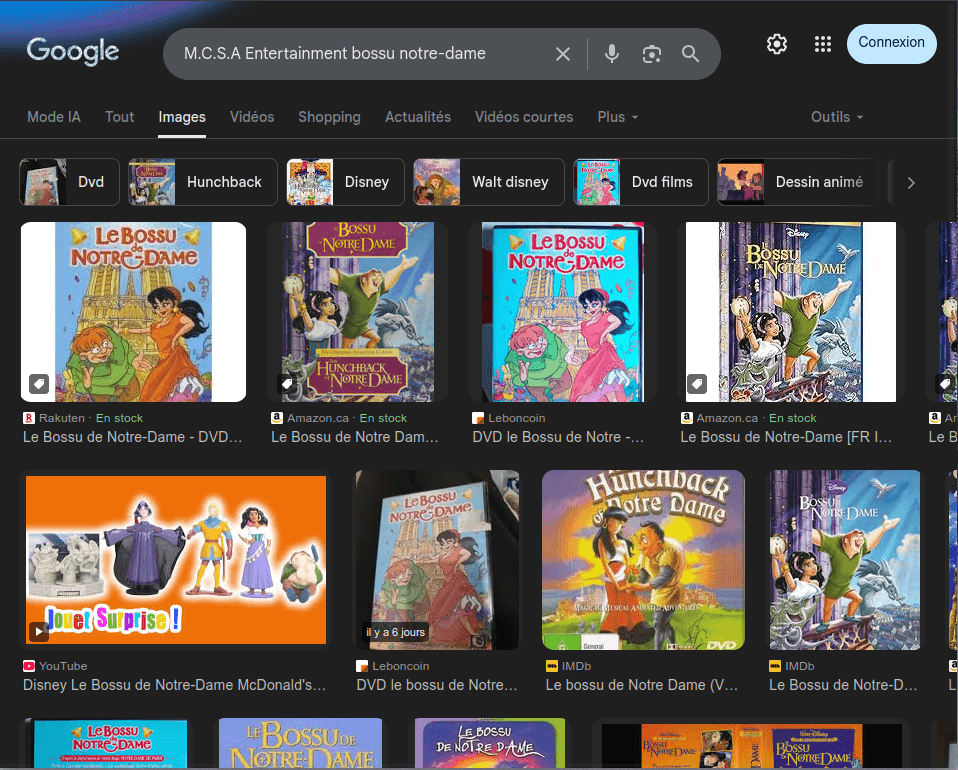
I even found the DVD for sale for 4 euros on an e-commerce website called Rakuten.
Interestingly, the AI overview also mentioned that M.C.S.A. Entertainment distributed French editions of the Disney movie. This, however, was most likely an AI hallucination, since after opening the full AI conversation, it told me that the movie edited by M.C.S.A. Entertainment is specifically NOT the Disney version.
All that being said, even the Google results are not giving much information on the movie itself.
So at that stage of my research, I only had one thing left to do: watch the movie! Since I don't own a DVD player anymore (and even if I did, it might not be able to play this one, since it uses the PAL encoding standard prevalent in Europe rather than the NTSC one used in North America), I ripped the movie and copied it to my Jellyfin server. And so I sat on my couch and watched yet another rendition of the Victor Hugo classic.
The opening credits brought the biggest surprise yet:
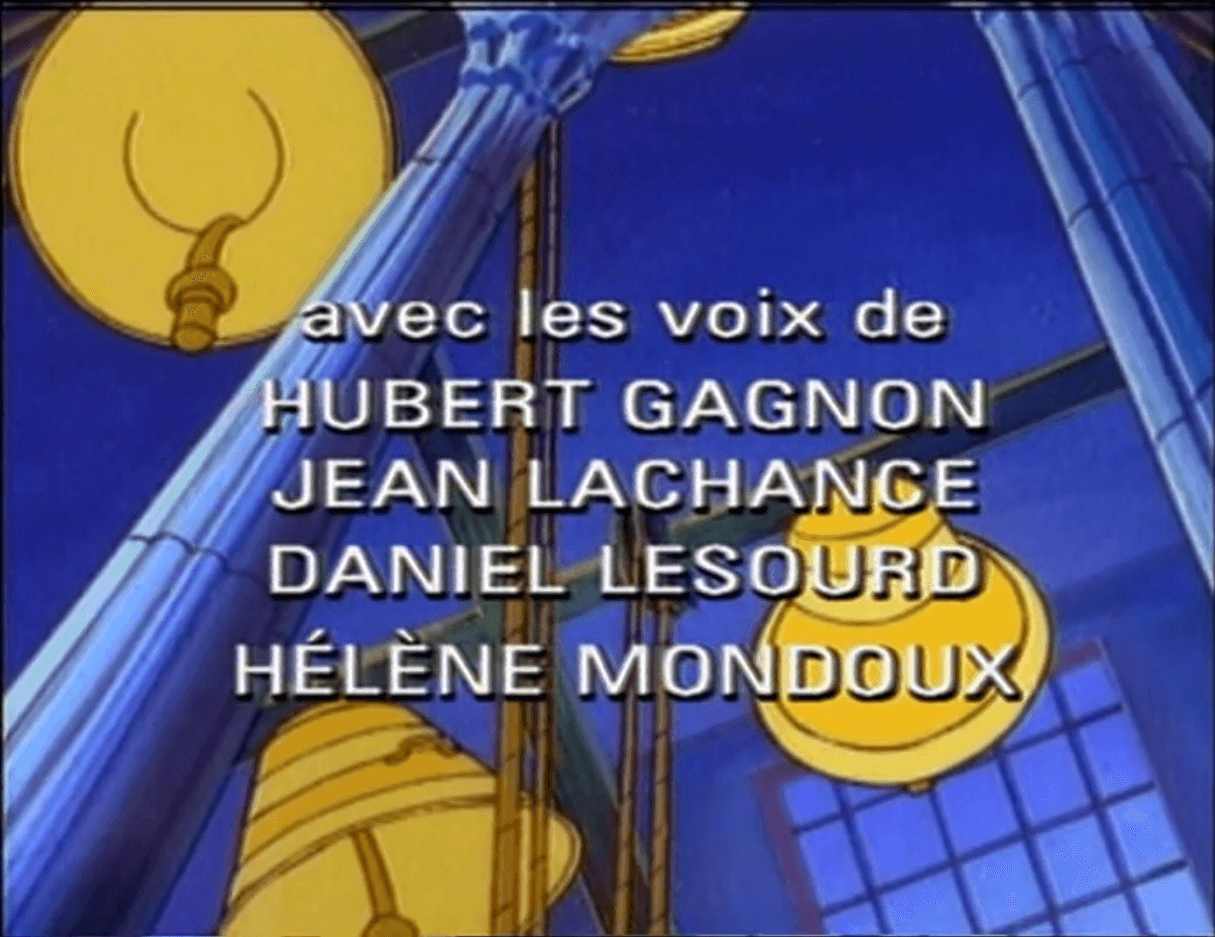
These are the names of the voice actors employed by the movie. The first name, Hubert Gagnon, is very recognizable to me: he was, until a few years before his death in 2020, the Québec voice of Homer Simpson. The three other names didn't ring a bell (pun intended), but I guessed right that they were also from Québec.
Also according to the opening credits, the screenwriter's name is Leonard Lee, which is obviously English-sounding. I was therefore now convinced the movie was a translation. That translation having been made in Québec was the most surprising part, since the DVD seemed to be targeted for the Belgian market.
And so the movie began, featuring a distractingly Homer-Simpson-voiced Claude Frollo. One of the first things I noticed during my watch was how part of the image featured visual glitches that would be typical of an over-watched VHS. Was that DVD's video track created by recording the output of a VHS?
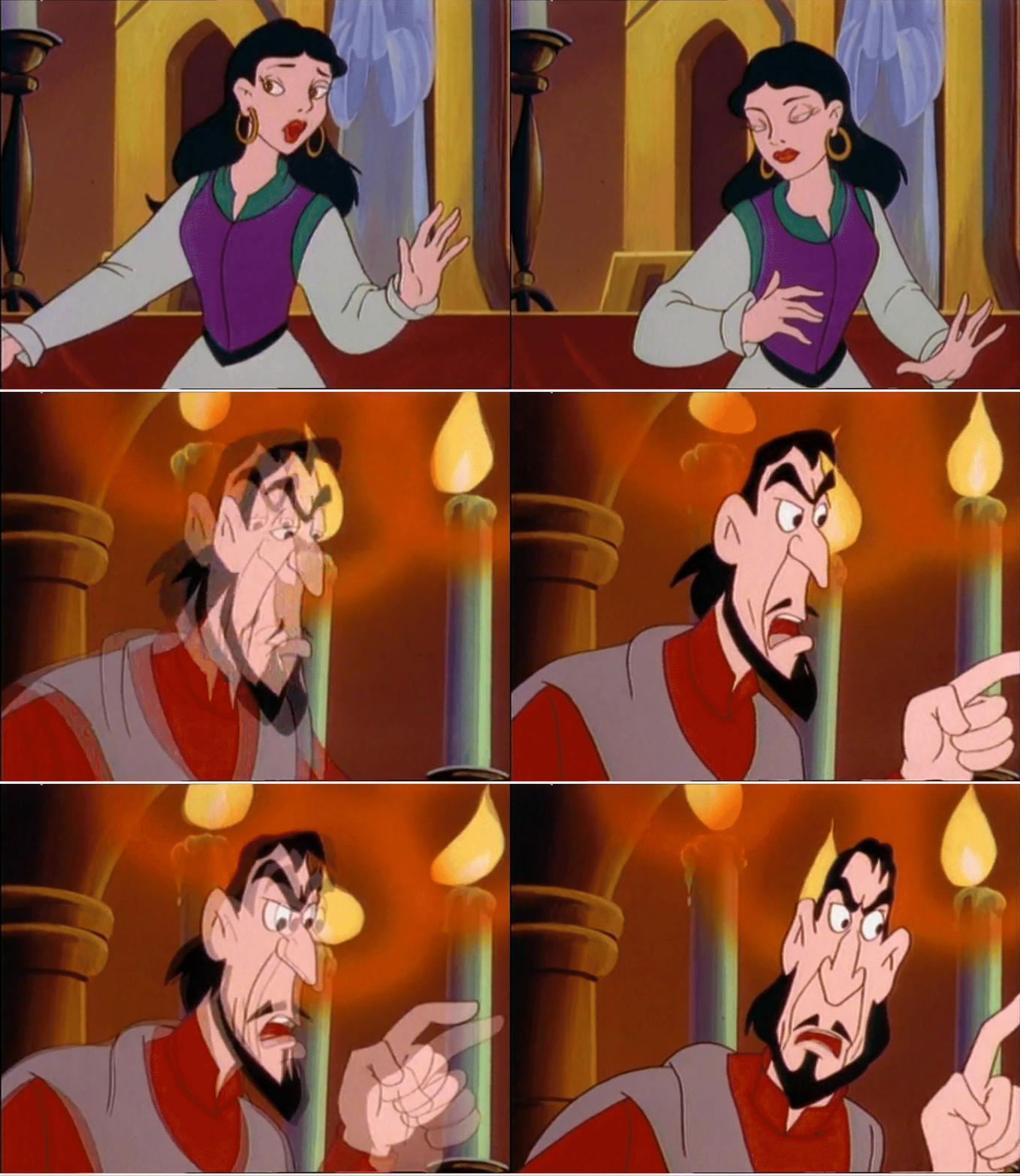
People who are at least somewhat familiar with Victor Hugo's Notre-Dame de Paris will know that in the original story, Claude Frollo is not a judge (as pictured by the Disney adaptation), and is actually the archdeacon of the Notre-Dame cathedral. In this adaptation, Claude Frollo is also not a clergyman (even though, interestingly, the DVD case's back cover says he is!), but while watching it, it was unclear to me what he was actually meant to be. He is definitely not a judge, as that is another character in the movie. He is also seen interacting with the king and is able to command soldiers, so he seems to have some kind of military position. Maybe his actual occupation would appear clearer if I were to watch the movie a second time, but forgive me for not wanting to do that. It is however made clear that he is the protector of Quasimodo (though we aren't told why).
Just like its Disney counterpart, the movie is not a faithful adaptation of the original story (understandably so, as Notre-Dame de Paris is not exactly family-friendly). Frollo's internal conflict is also less developed than in the Disney version, making him more of a, um, cartoon villain. He still accuses her of being a witch who mesmerizes men with her immense beauty, a crime for which she must burn, but the whole storyline of him trying to coerce her into being his in exchange for her life is absent. He also throws a fit at a Notre-Dame priest for committing the blasphemous act of... teaching the pagan Esmeralda how to pray?
While the 50-minute motion picture is arguably not very good, it did make some interesting choices. Contrary to the Disney movie, it portrays Quasimodo as deaf and not fully socialized. Furthermore, some significant scenes of the original story that are absent from the Disney adaptation are present in this one, such as Quasimodo being given water by Esmeralda while on the stocks. The movie also made some ridiculous choices, such as the king being convinced to order the release of Esmeralda following a petition organized by Phoebus, while also being told by a Notre-Dame priest that a certain someone confessed to falsely accusing Esmeralda of being a witch. And so Frollo attempts to take the matter of ending Esmeralda into his own hands, then falls off the bell tower after an altercation with Quasimodo. Boom, happy ending, featuring Esmeralda, Quasimodo, and of course, Captain Phoebus (who, just like in the Disneyverse, is a more likable character than his literary counterpart, to say the least).
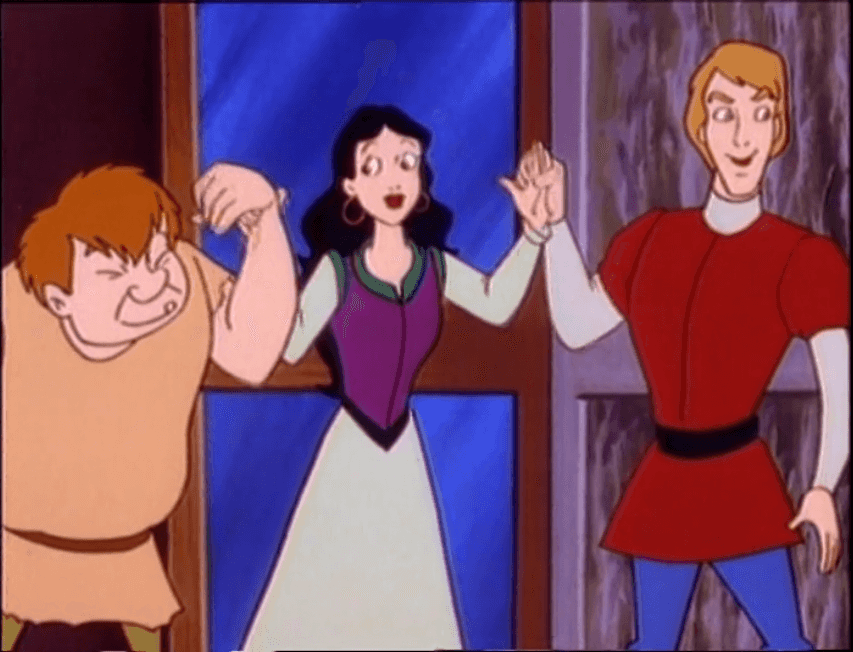
The ending credits finally gave me more information on the origin of that mysterious movie:
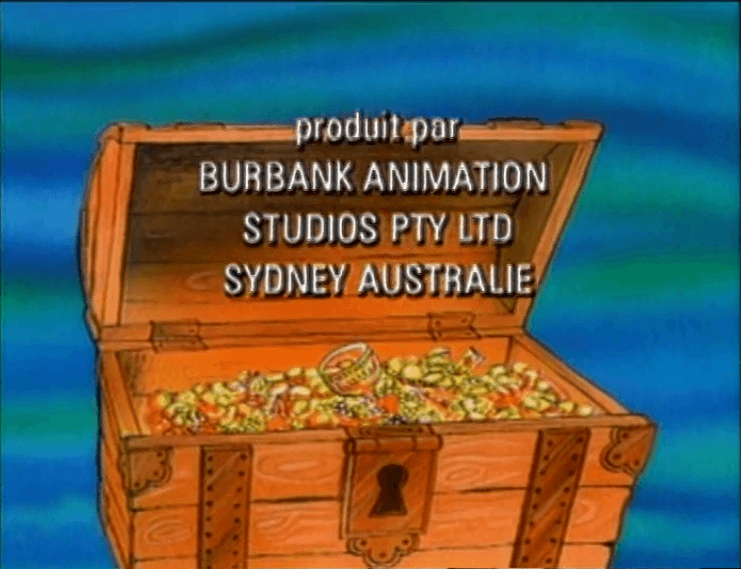
So it is an Australian movie after all, produced by a company named Burbank Animation! That was the missing piece for finding actual information on the movie. And here it is, on Burbank's retro-looking website:
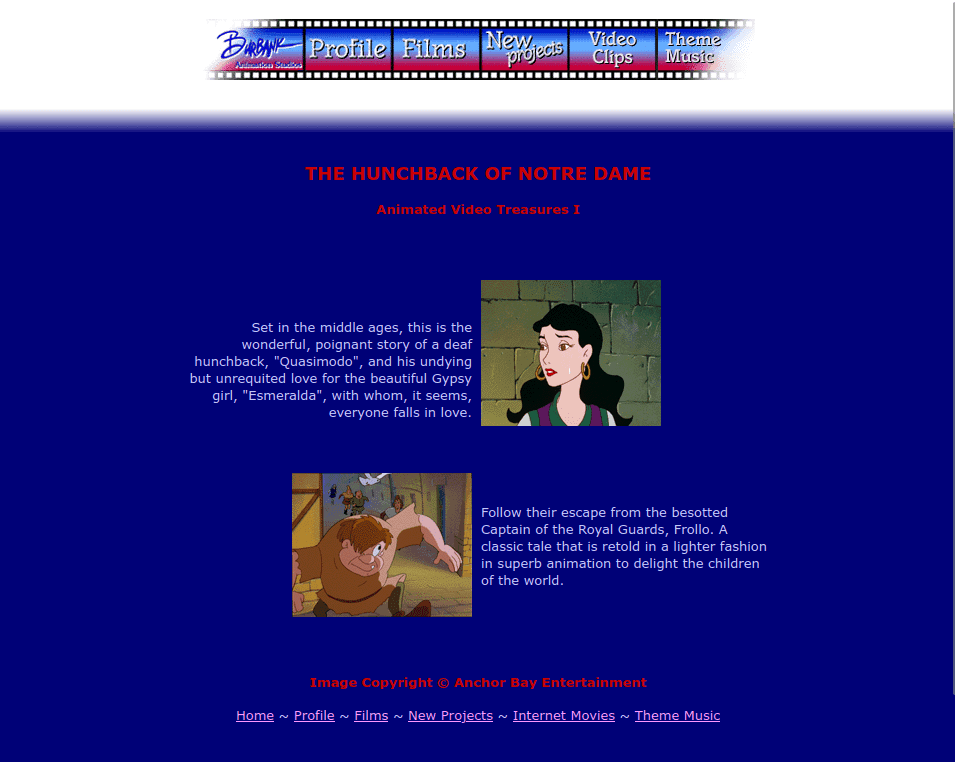
Look at that! Frollo is apparently the Captain of the Royal Guards?
As a fan of retro Internet-related things, I was pleased to peruse that website, which seems to be from the same era as the movie. It turns out Burbank Animation is specialized in making animated movie adaptations of stories in the public domain that were also adapted by Disney.
Finally knowing the name of the studio allowed me to find more information on the movie. According to the List of Adaptations page on The Hunchback Wiki, this movie actually came out in 1996 rather than 2005, and is not even the first Hunchback adaptation by Burbank Animation! Now, 1996 is an interesting year for this movie to have been released in, since the Disney adaptation was also released that year!
In fact, it appears that no fewer than SEVEN animated adaptations of Notre-Dame de Paris were released that year! I assume many animation studios just decided back then that Disney releasing a new movie based on a work in the public domain was an occasion to make a quick buck by doing the same thing. They probably profited off confused parents in the VHS aisles of discount stores. One of the other non-Disney adaptations released that year was actually a Canadian-French TV series titled The Magical Adventures of Quasimodo, which I think I remember watching growing up. There is also another adaptation from that year named The Secret of the Hunchback, which apparently ends with Quasimodo growing angel wings and flying to heaven, which rings a bell too (pun still intended).
So, I guess the mystery behind my thrift store DVD is solved. And while the mystery of why I was inspired to write a blog post about it remains, I might have found a new hobby (as if I needed more of those) in finding obscure mockbusters of Disney movies!